All articles
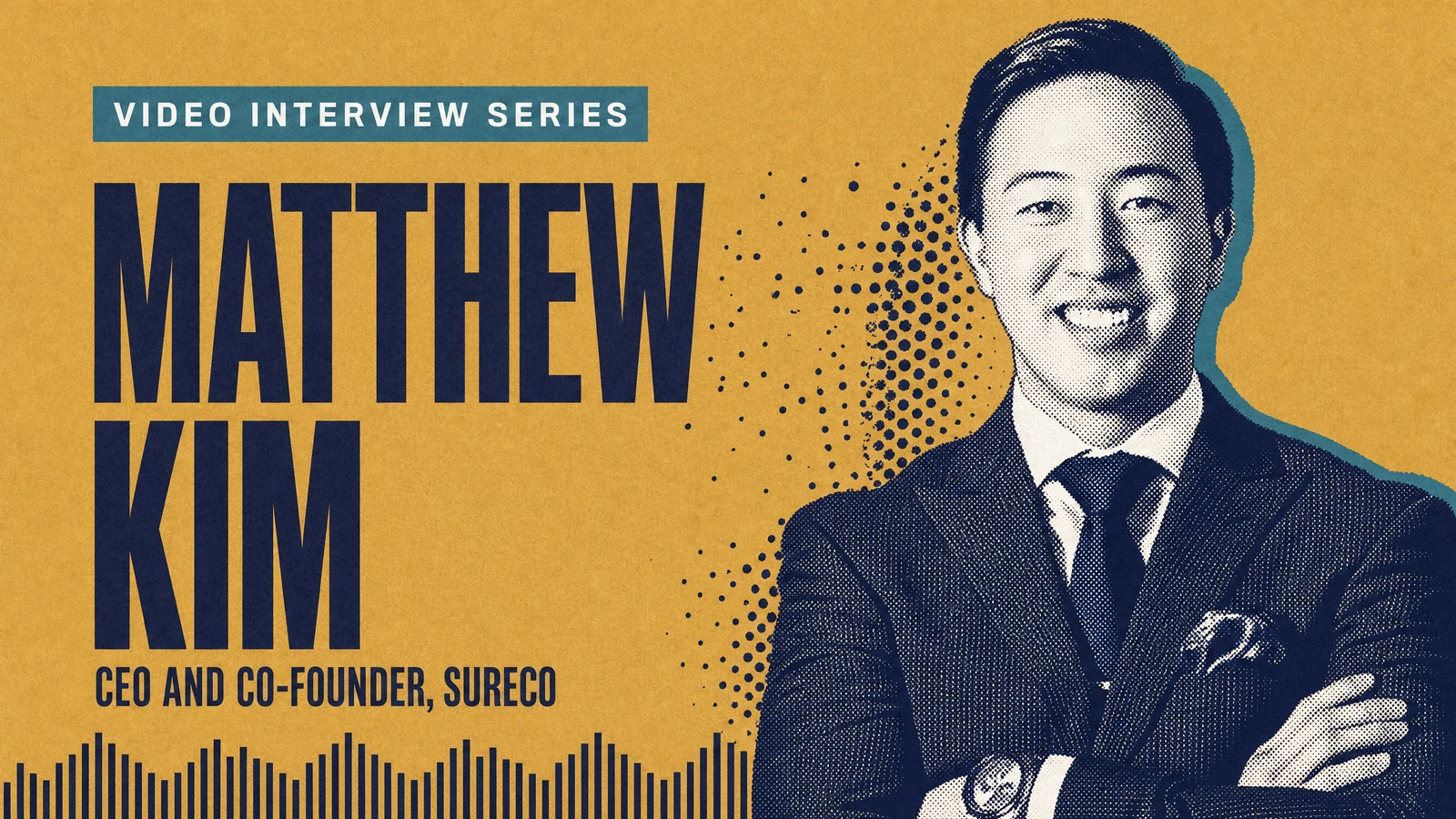
From Broker to Care Delivery: Why SureCo’s Matthew Kim Calls CHOICE (ICHRA) a Seismic Change
SureCo CEO Matthew Kim on 21 years across brokerage, administration and care delivery, why CHOICE (ICHRA) is the first real lever for change he has seen, and the personal reason behind that conviction.
Make Benefits Brief News one of your go-to sources on Google

This is the first time I've seen something that truly has the ability to make a seismic change in how health care is valued, received and benefited for the individual and the employer.
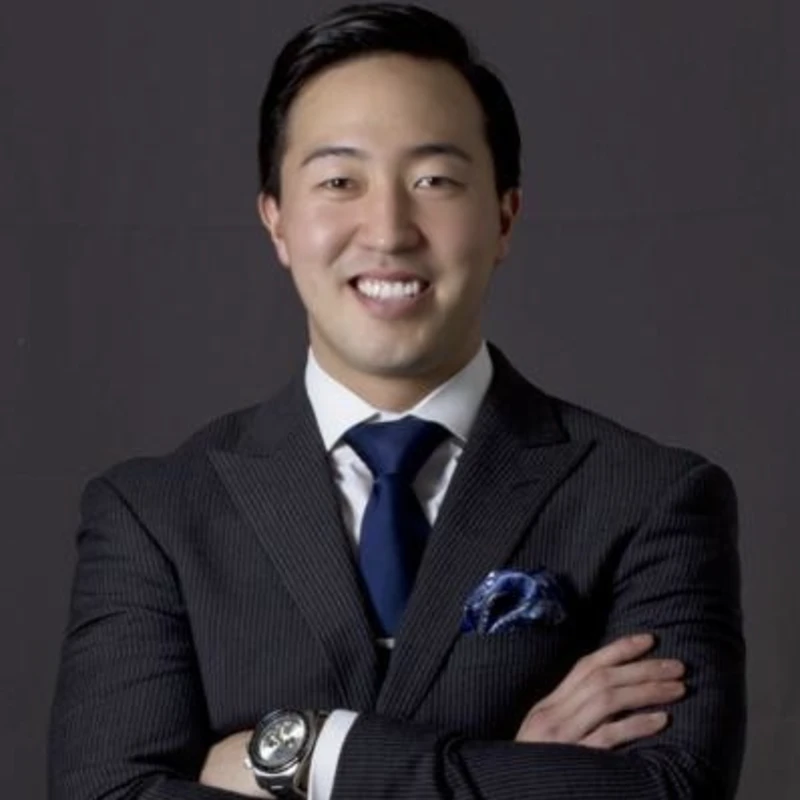
Matthew Kim
Matthew Kim likes to say that his experience “can now legally drink.” Twenty-one years into the industry, the CEO and co-founder of SureCo has worked as a broker, moved into third-party administration, worked in reference-based pricing and, eventually, in direct primary care. He counts himself among the few people in the industry who have seen it “from distribution all the way to care delivery.”
That vantage point is the backdrop to his view of CHOICE, previously known as ICHRA. Kim does not argue that the model has arrived. He argues that, after two decades at every link of the chain, it is the first change he has seen that puts real levers in the hands of the individual. The reason he is sure is personal. He gets to it at the end of the conversation, and so does this piece.
Every seat in the chain
Kim calls his career a “lifelong journey of trying to pursue something that can make substantial change in the American health care system.” Each stop touched a different part of the problem: how coverage is sold, how claims are administered, how they are priced, how care is delivered.
Under CHOICE, the employer funds a tax-advantaged allowance and each employee chooses an individual plan. The decision moves from the benefits committee to the person who will use the coverage. That is the shift Kim has in mind when he talks about a seismic change for “the individual and the employer,” and it is why, after everything he has seen, he calls it a first.
The most expensive moment, and the most hopeful one
Kim comes at the cost problem from an unusual angle: gratitude. He says he has “a very deep sense of gratefulness for this country,” and that one of the things he sees holding it back is “how poor our health care system is.”
The pressure point he names is family coverage. In his words, “the cost of family health care in America is exceeding the minimum wage.” The published numbers point the same way. KFF’s 2026 Employer Health Benefits Survey, released in October, puts the average annual premium for employer-sponsored family coverage at $28,303, up 5% from 2025. The share paid by workers rose faster, by 9%, to $7,471. A full-time worker earning the federal minimum wage of $7.25 an hour earns about $15,080 a year.
Kim’s view is that costs are reaching a level that is “completely untenable for organizations,” and his own projection is that family coverage will be “clipping over $30,000 a year.” The 2026 average is already within $1,700 of that mark.
Then the turn. In the same answer, Kim calls this “a moment in time that I have the most hope for American health care.” He gives three reasons: advances in AI, progress in peptide and drug discovery, and “the ability of choice in American health care.” Together, he sees “a new dawn that can happen for consumerism in health care,” one in which the individual helps drive the change “because now we have the levers to do so.”
The two halves belong together. Cost is what makes the status quo hard to defend. Choice is what gives the person receiving care a say in what the money buys.
Plan the transition around the people with the most at stake
Asked what a customer-led product means at SureCo, Kim moves quickly past the software. Most organizations think of product as digital, he says, and that is a big component, but the point is “the total experience.”
That is where he places the main lesson from moving employer populations to ICHRA. “One of the big things that was amiss was like the care coordination,” he says. Every workforce has a very small percentage of high utilizers, people going through what he calls the “most stressful” and “toughest time in their life.”
“The last thing that they need is more disruption in how health care is received.”
Matthew Kim, CEO and Co-Founder, SureCo
It is the standard any benefits transition gets judged on, whatever model an employer moves to. For most employees, a change of plan is an enrollment task. For the few in active treatment, it can touch their network and how their ongoing care is arranged. SureCo’s response was to assemble a care coordination team for high utilizers, which it still runs as it brings on large employers. The broader point for HR teams and brokers is that how an enrollment goes is decided by the preparation around it, and the employees with the most at stake are the ones to plan for first.
What it takes to become the gold standard
Kim is direct that the model is not finished.
SureCo’s focus, he says, is to keep working upmarket and bring larger employers into ICHRA. “But there are fundamental things that need to change for the full adoption of kind of the true mega enterprise.” He also answers the obvious objection to his interest in that segment before anyone raises it: “not just because there’s a big ton of dollars there.”
His reason is about the shape of the market. As things stand, he does not see the market “adopting ICHRA as a true replacement as a whole.” His belief is that it will become “the gold standard,” and that getting there “will need the mega large enterprises to move in that direction.”
Part of what has to change, in his account, sits with carriers. He points to work under way with Oscar and Kaiser, and “the changes that they want to make to make this a much more complete experience,” one that meets “the expectations that we have as consumers.”
The bright spots
What keeps Kim going is not the product. He describes a recent leadership off-site, where one of the vice presidents in the room had started as his receptionist seven or eight years earlier and moved through executive assistant, program manager and director of operations to VP of operations. He calls people like her the organization’s “bright spots,” and says that seeing “how mission-driven they are” is what really gives him energy.
A wake-up call
The reason behind the conviction comes last. Kim is a second-generation Korean American, born in the United States, and like many in that generation, he says, he was pushed toward law or medicine. That was not in the cards for him, but health care always interested him. A lot of his family members have lived with chronic disease, and some have died from it.
Early on, he says, his ambition was closer to “a lifestyle kind of pursuit”: have a good small business and run it well. That changed in 2019, when his sister died about a week before her 40th birthday.
“That was just kind of a wake-up call in regards to just some of the tragedies of the American health care system.”
Matthew Kim, CEO and Co-Founder, SureCo
What followed was a hard conversation with himself, and the recognition that he had “a golden opportunity” to “build a world-class, purpose-driven organization.” It was, he notes, the same year that ICHRA was approved. The federal rule that created the arrangement was published in June 2019 and applied to plan years starting on or after January 1, 2020.
Put back together, Kim’s case runs in the order he told it. Family coverage now costs more than a full-time minimum-wage job pays in a year. Choice gives the individual a lever they did not have before. A transition is judged by the employees who can least afford disruption. And the model becomes the standard only when the largest employers move. For employers and brokers weighing CHOICE (ICHRA), that is a usable sequence of questions: the economics, the employee’s control, the continuity of care, and the direction of the market. For Kim, it is also the work he committed to in 2019.
Sources:
- KFF, 2026 Employer Health Benefits Survey
- Federal Reserve Bank of St. Louis (FRED), Federal Minimum Hourly Wage for Nonfarm Workers for the United States
- Federal Register, Health Reimbursement Arrangements and Other Account-Based Group Health Plans (final rule, June 20, 2019)
- Benefits Brief News, ICHRA Is Now the CHOICE Arrangement: What Changed and What Didn’t