All articles
A Carrier Judges Its CHOICE (ICHRA) Partners By What Happens After The Sale
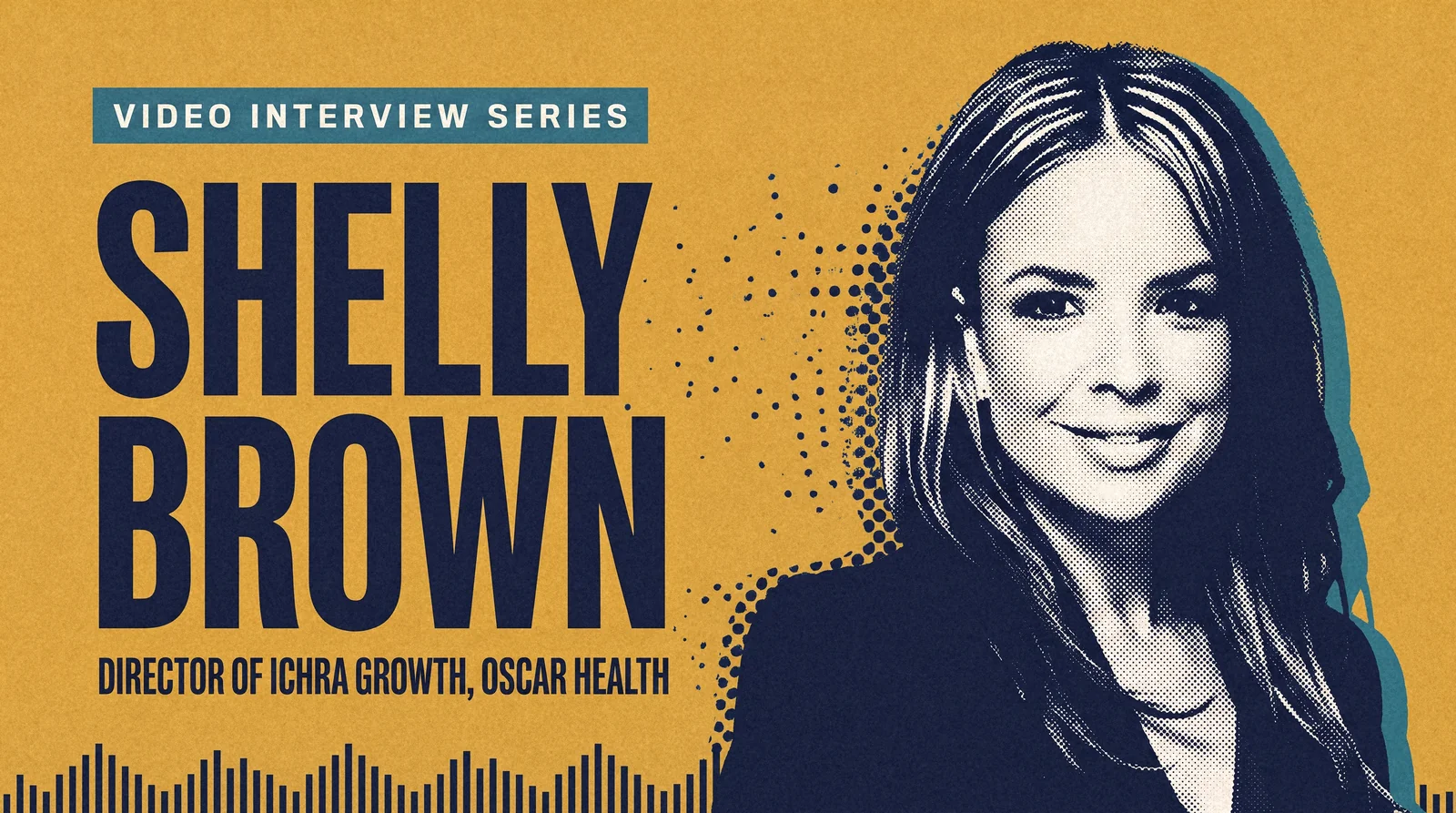
Shelly Brown, Director of ICHRA Growth at Oscar Health, on why employers are already interested in CHOICE (ICHRA), and why a carrier judges a partner by what happens after the sale.
Make Benefits Brief News one of your go-to sources on Google

The renewals have gotten to be, you know, 20% or higher year-over-year, and it's just not sustainable for a small employer.

Shelly Brown
Consultants do the due diligence. HR sits through the plan comparisons. The renewal arrives anyway, and employees still say they don’t really like their insurance.
That is the loop Shelly Brown, Director of ICHRA Growth at Oscar Health, describes when she explains why employers are looking at CHOICE, the arrangement formerly known as ICHRA. She sees it from the carrier’s side of the table: she manages Oscar’s national partnerships with large consulting houses and brokers. What follows is her view, set against published data where it exists.
Her argument is that getting employers interested is no longer the hard part. The harder question, and the one she uses to judge a platform partner, is what happens after the sale: how the consultant and the client are onboarded, who supports them next, and what the member experience looks like once the employer says yes.
Interest has stopped being the hard part
Brown gives two reasons. Carriers “have gotten very intentional about it and created the plans that make sense for an ICHRA solution,” and “there’s also a lot of legislative momentum at the federal and state levels.” Together they are, in her words, “primary drivers for people getting excited and wanting to look into ICHRA.”
The federal side is easy to see. On September 3, 2026, CMS and the Small Business Administration renamed the arrangement the CHOICE Arrangement. The name is new, and the rules did not change with it: the 2019 regulations, employee classes and notice deadlines all still apply, and CHOICE is not written into federal law. CMS now hosts an employer page with a cost estimator and a list of third-party administrators, and notes that appearing on the list is not an endorsement. Somebody still has to do the choosing.
Renewals start the conversation
Brown starts with small groups, where she sees “a lot of adoption” for “the obvious reasons.” Increases of “20% or higher year-over-year” are “just not sustainable for a small employer.”
Larger employers feel it too. SureCo’s 2026 State of ICHRA report, which surveyed mid-size and large employers, found nearly 90% reporting a rate increase this year and one in three a double-digit one. Brown sees “this cohort of ALEs, applicable large employers, who are also embracing ICHRA for similar reasons,” with renewals that are “not manageable anymore.” The HRA Council’s 2026 data report, with data as of January 2026, counts 108% more applicable large employers offering ICHRA than a year earlier. Part of that comes from new data providers joining the dataset. Among the platforms that reported in both years, the increase is still 39%.
Price is the trigger. The second motive is about the people on the plan. Brown sees “a desire to solve for consumerism,” and she describes the status quo this way: consultants “put so much effort to work with, you know, HR to find plans that make sense for a very diverse population.”
“It costs a lot of money, and at the end of the day, employees say they still don’t really like their insurance.”
Her conclusion is short but clear: “there is definitely an opportunity to try something new.”
What a carrier asks of a platform partner
If interest is the easy part, the sale is not the finish line. “A strong partnership with an ICHRA platform,” Brown says, “is one that has a great alignment as far as the service model approach.” She is specific about what that looks like.
“We’re all great salespeople, but what’s really important is what does that onboarding experience look like and ongoing support for the consultant and for the client.”
Shelly Brown, Director of ICHRA Growth, Oscar Health
When “those synergies are shared, we see reduced friction and a better experience.” The pitch is table stakes. The rollout is the product.
Brokers apply the same test. Among brokers with clients already on a CHOICE (ICHRA) arrangement, 95% said the quality of employee education and support from their administrator directly affects their satisfaction with the partnership. Lisa Collins of ChoicePlus Benefit Advisors puts it in vendor terms: what separates a strong administrator is knowledge and education, not how good the technology looks. Anthony Lopez of The ICHRA Consultants calls the missing piece a human service layer.
Oscar and SureCo are partners, and Brown does not leave the praise abstract. She puts “the people” first: “We love working with SureCo because of the people.” Then the specifics: a service model that is “aligned,” cost analysis turned around “like within 24 hours,” and a member interface that is “state-of-the-art” and “reduces the friction that comes along with the change management and rolling out in ICHRA.”
For a brokerage, that first rollout carries extra weight. As SureCo’s Chris Poucher puts it, the first successful placement is where confidence and partnership are built.
Oscar’s pricing bet: members who already use care
Brown calls Oscar “a data science organization” that likes to “nerd out over a lot of the statistics regarding ICHRA and everything in between.” One pattern stands out to her: “when you look at the MLRs between on-exchange and off-exchange, they’re actually lower for off-exchange.” The medical loss ratio, or MLR, is the share of premium a carrier pays out in claims.
Her explanation comes in two parts, which she frames as “some of the thoughts behind that.” First, “we typically have younger members who enroll in off-exchange products.” Second, the people embracing ICHRA “have not really had gaps in insurance. So they’re coming from the traditional group world, and so they’ve been going to the doctor, and so the risk is mitigated.”
For a broker, the useful part is the profile. Oscar reads an employer arriving from group coverage as a population that has already been using care.
The launch is won through managers
“I think the key to a successful ICHRA launch is really just the education strategy.”
Shelly Brown, Director of ICHRA Growth, Oscar Health
Brown adds that Oscar and SureCo “work together very well on that.” Her sequence starts with “talking to the key stakeholders.” The rest, in her words: “Then you talk to the managers. Then you roll it out to the employees because ideally an employee is going to go to their manager when they have questions about the ICHRA.”
Note the word “ideally.” Brown’s claim is conditional, and the condition is not the plan or the platform. It is whether employees hear about the change from someone they already go to with questions.
That part will feel familiar to anyone who has run a group-plan renewal, where communication was already the pressure point. CHOICE changes who picks the plan, not who employees ask when something confuses them. Sam McIntyre of M3 Insurance makes the same point from the employer side: a transition fails when the communication is inconsistent, not because the model is wrong.
Where Oscar goes next
Brown closes on the product. Oscar is “expanding into new states, South Carolina being one of them,” and she points to chronic condition plans that are “very popular for an ICHRA solution.” Her example is the menopause plan, which Fierce Healthcare reports was built with Elektra Health for the 2026 plan year: “the first ever women’s menopause plan that nobody else has.” Why it matters to her is the word from earlier: “it solves for that consumerism that people are looking for with ICHRA.”
For a broker or consultant deciding where to place an employer, her answers reduce to three questions to ask before signing. Who onboards the consultant and the client, and keeps supporting them afterward? What does the member see once the employer says yes? Who reaches the managers before the employees do?
Interest, in Brown’s account, is already there. What a carrier watches is the day after the sale.
Sources:
- SureCo, 2026 State of ICHRA Report
- CMS, CHOICE Arrangements
- Benefits Brief News, ICHRA Is Now the CHOICE Arrangement: What Changed and What Didn’t
- HRA Council, 2026 Data Report
- Fierce Healthcare, HLTH25: Oscar Health, Elektra Health launch ACA plan for women navigating menopause