All articles
The Four Things That Decide How A CHOICE Enrollment Goes
Grace Roque, Director of HR at RSR Senior Residences, on the four things that decided how her enrollment went, and why most of them were already part of the job under a group plan.
Make Benefits Brief News one of your go-to sources on Google

Options, options, options. We are offering now so many different options that they can pick from different vendors, different insurance companies, as opposed to us only giving them and allowing them only three.
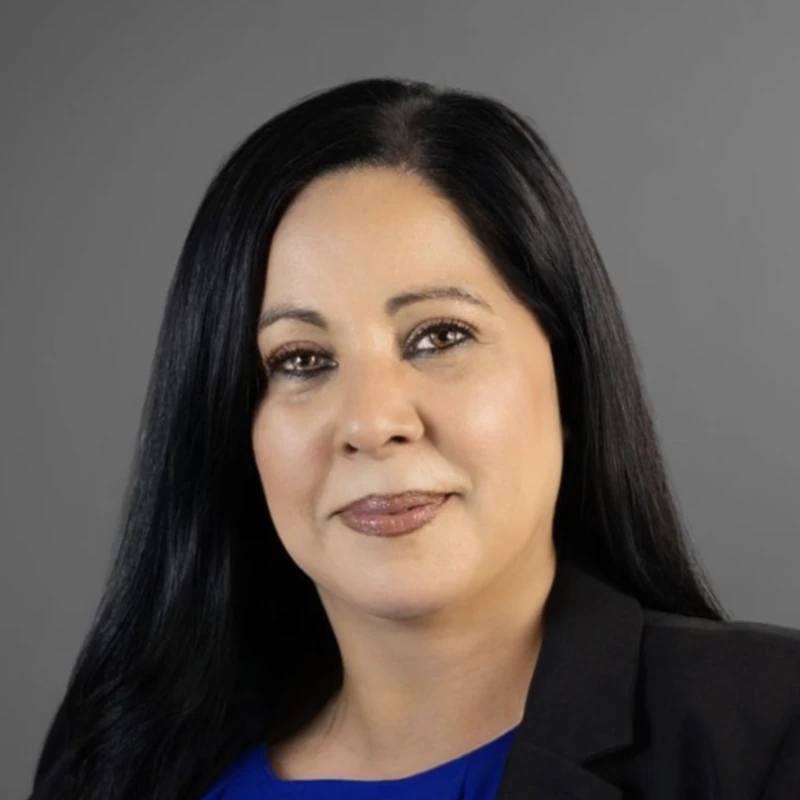
Grace Roque
Under a group plan, the central benefits question an HR lead answers once a year is which plans to buy. Under CHOICE, previously known as ICHRA, that question leaves the room. What stays is the work most HR teams were already doing around it: communicating early, staffing the enrollment, answering the questions that come back, and deciding how much the company funds. Grace Roque runs all four, and she is clear about which ones made the difference.
Grace Roque is Director of HR at RSR Senior Residences, five senior living communities with more than 398 employees across South Florida, on a CHOICE (ICHRA) arrangement administered by SureCo. For Grace, early communication and having the right support in place made the difference.
The starting point is the constraint she used to work inside. “We are offering now so many different options that they can pick from different vendors, different insurance companies, as opposed to us only giving them and allowing them only three different options to pick from,” she says. “Most of the time they’re not either friendly for them, because they are too expensive or their doctors are not on the plan with the ICHRA.”
It is not a statement about preference. With three plans on the table, the binding constraint is whether an employee’s own doctor is in one of the three networks and whether the premium is payable out of that employee’s paycheck. Two plans can fail both tests at once. Widening the shelf changes what can actually be matched: “You have more space to be able to get their providers on the plans that we offer with ICHRA.” Members average 74 plan options each, according to SureCo’s 2026 State of ICHRA report.
What follows is an operational question rather than a buying one, and it is the same question a group renewal raises: how do you get everybody enrolled, informed and supported in the time you have.
Start the calendar before the renewal
Roque’s enrollment does not begin when the window opens. It begins weeks earlier, with a save the date to the community administrators, the full information pack a couple of weeks out, and then a reminder every single week. By the time the window opens, the question has already arrived on its own: “Every time they see me, when is my benefit, when is my benefit.”
The reason the front-loading matters is arithmetic. The window itself is short. “We usually have about seven to eight days to be able to enroll everybody,” she says. Anything not communicated in advance has to be communicated inside those eight days, at the same time as the enrollment itself.
Eight days also means somebody will miss it. One RSR employee did, and the administrator allowed the enrollment through after the date. “They’ve been good to let us do that too,” Roque says. A hard window is what keeps an enrollment finite, and what happens to the person who misses it is worth settling with your administrator up front.
Her own summary is the least glamorous line in the interview and the most useful: “If I start from the beginning and do everything right and make sure that everybody knows that it’s coming, it’s an easy peasy for me.” The communication work sits before the window, not during it.
Meet the workforce where it is
Individual coverage is chosen person by person, which means the enrollment has to be staffed person by person. Group enrollments are staffed the same way. What changes is that the conversation is about one person’s doctors and budget, instead of which of three plans to tick.
Roque blocks a couple of hours a day, a few days a week, for employees to come and see her, and she visits one or two communities every week through the year. Two brokers from Liberty Run, the firm RSR has used for four years on its dental, vision and supplementary lines, cover the Broward sites. She takes the Miami-Dade ones herself, for a reason that has nothing to do with geography: “I stay in Dade because I speak Spanish and they don’t.”
That division of labour is also what broker adoption looks like from the inside. The brokers are not introducing the model at renewal. They are running enrollment days alongside HR.
Language is not a detail in this workforce, it is the delivery mechanism. So is availability: “My cell phone is available to every single employee in the company.”
Design for the questions you know are coming
Asked how many of her employees understand the coverage they are enrolled in, Roque does not reach for a reassuring number.
“The percentage of my employees that understand the benefits that they’re enrolled in is about 60%.”
Grace Roque, Director of HR, RSR Senior Residences
The figure is her own estimate, not a study, and the more instructive part is what she does with it. “The other 40 that don’t understand, they come and they ask me.” The gap is not treated as a failure of the model. It is treated as a known, recurring input that the enrollment has to be designed around.
It helps that the questions are narrower than the anxiety suggests. They are rarely about which plan is better. “Most of them come and say I didn’t receive my ID,” she says, or they cannot find their doctor, which usually resolves the same way: “You need to register, because a lot of people don’t register. And when they register, guess what, they have all the information that they need.” The friction concentrates on activation, not on selection. That is consistent with what members do once they are inside the platform: 85% of roughly 20,000 active members researched their options and scrolled through an average of 31 plans before deciding.
Handling the 40% takes a routing structure rather than more email. Roque describes three places a question can land. “They have SureCo, and they can also call the insurance company. And then they have me. And if I can’t answer it, I always find a way to help them through it.” The first of the three is the one she points people to by default, and the reason is the same reason she covers the Spanish-speaking sites herself: “You have customer service email, you have the experience, they will help you, they speak Spanish.”
What changed the workload for her was moving from a shared inbox to named contacts on the administrator’s side. She raised it with Erik and Jennifer on the SureCo side, and two people were assigned to the account. “Instead of having just emails, we’ve had someone that we could go straight to be able to ask questions, or help us with the dashboard.”
“Having a point person is great, because you feel that personal touch from that person.”
Grace Roque, Director of HR, RSR Senior Residences
The alternative is the one every HR lead recognises: “Writing an email and then getting random people to answer you that you don’t know. And sometimes you go back and forth and you get different people, so sometimes that personal touch is gone.”
One expectation has to be set explicitly, and it is the one employees push hardest on. They elect a plan, second-guess it, and come back wanting to switch. Inside the window that is a support task, and Roque has leaned on it more than once. After the window it stops being a support task, because the money is pre-tax and the rules are federal. “They do think it does, but it doesn’t, because of the pre-tax,” she says. Saying so before enrollment rather than after is part of the job.
Own the contribution decision
The employer’s lever does not disappear under CHOICE (ICHRA). It moves, from selecting the plan to setting the funding, and unlike a plan selection it is a visible decision taken every year.
Roque describes it without euphemism. Cost modelling starts early, from the census, and firms up closer to open enrollment when the market prices. She is also clear that the model did not make the increases go away. “The market is what drives, obviously, our increases sometimes. It definitely doesn’t decrease,” she says.
Then the company decides. “We decide as a company what percentage we’re going to give to the employees, or are we going to take some and just keep it ourselves, which is what we did this year, because we knew that our employees really couldn’t take much of a hit when it came to benefits.”
RSR absorbed the increase, and the effect showed up in take-up: “That helped also bring in people to want to take our plans, because they didn’t have to pay so much.” The contribution level is also what makes the choice real at the employee end. “The employer will give in a little bit of money for them and then they can pick what they want to spend. So that makes them feel like they have the autonomy to be able to decide for themselves.”
The timing is the part finance teams tend to underrate. Under a group renewal the number lands at the end. “When you go to group, you really don’t know what the actual savings are until the end,” Roque says. Modelling against a census before the window opens is a different planning exercise, and it is what lets an employer decide how much of an increase to absorb rather than discover it.
One more change is small enough to be easy to miss. Under a group plan, an employee weighing the company plan against a spouse’s plan is a conversation with no moving parts, because the employer has already chosen. Roque now runs it as an open comparison: “Why don’t you bring me what you have with your spouse, let’s compare. You know, I might be able to do better for you with what we have.”
For an HR team, the practical version is simpler than the transition makes it sound. The plan choice leaves the room. The rest of the job stays, and it goes well for the same reasons it always has: communicate early, spend time with people, give the questions somewhere to land, and take the funding decision on purpose.
Source: SureCo, 2026 State of ICHRA Report