All articles
The Broker's Real Job Is Becoming A Filter Between Too Many Solutions And Too Little Attention
Brown & Brown Employee Benefits Consultant Cooper Jernigan on why benefits disengagement is now driven by overload and decision fatigue and what employers can do about it.

Make Benefits Brief News one of your go-to sources on Google

It's not that people aren't informed. It's that they're overwhelmed with the amount of information. People are suffering from analysis paralysis.

Cooper Jernigan
The old assumption about benefits disengagement was that employees did not have enough information. That assumption is now backward. Employees are drowning in plan language, point solutions, app notifications, and enrollment options, and the result is a workforce frozen by too many choices. Disengagement has become a decision-fatigue problem, and the employers treating it as a communication gap are solving for the wrong thing. The employers seeing the best engagement are the ones helping employees focus on what actually matters to them.
Cooper Jernigan is an Employee Benefits Consultant at Brown & Brown, the global insurance brokerage, where he advises employers on benefits strategy, plan design, and cost optimization. He came to the role from a financial analyst background at the same firm, which shapes how he connects employee engagement to the downstream cost mechanics of claims and renewals. In his view, solving disengagement requires recognizing the practical limits of human attention.
"It's not that people aren't informed. It's that they're overwhelmed with the amount of information. People are suffering from analysis paralysis. It's so much information, but they're not sure what to do with it." That distinction reframes the entire engagement problem, and it points to a different set of solutions than the industry has historically reached for.
More benefits don't fix disengagement
The intuitive employer response to benefits dissatisfaction is to add richer benefits. Jernigan sees that instinct backfire when the complexity of administering and explaining those benefits scales faster than the value employees actually capture from them. "There's a line where you're just adding on more benefits to have that warm, feel-good feeling rather than it actually having material impacts on your employees," he notes.
The pattern he describes is an industry habit of throwing solutions at the wall to see what sticks. The problem is that in a crowded benefits environment, too much sticks at once. "Rather than one thing sticking, it's these 12 things that are the solutions to set problems."
The complex benefits guide is a symptom of the same disease. Documents that are supposed to clarify what a plan offers often do the opposite, burying the actual coverage details under so much language that employees can't tell what they have.
Communication must meet employees where they are
When Jernigan talks about communication as the fix, he's specific that it is not about volume or polish, but matching the delivery to how a given workforce actually processes information. "It means meeting people where they're at," he says. "Whether it's a blue-collar industry that isn't well-versed on apps, or whether it's going to your clients to actually sit there and have those open enrollment meetings with people to explain their benefits. It's a lot more boots on the ground."
The app example is where he is most pointed. Technology that works beautifully for one population can fail completely for another, and forcing the wrong channel onto a workforce doesn't change how those employees behave. "I've dealt with populations that are in their later years where apps aren't necessarily something they go to. You're never going to convince somebody to change the way they process and the way they behave."
The temptation to offload communication onto a tool or a third party is exactly where utilization tends to drop, because the employer loses its hands-on connection to whether the message is landing.
Strategy should belong to the demographic
The instinct to personalize benefits for every individual is well-intentioned but, in Jernigan's view, unworkable at any real scale. He calls it the Cinderella shoe problem: the attempt to make every benefit fit every single person perfectly. "The idealized version that everybody's individualized, that Cinderella shoe, is going to run you rampant. You don't have the ability, especially at a 1,500-employee company, to truly do the Cinderella shoe thing for every single person," he says.
The workable middle ground is to build strategy around the demographics of the workforce rather than the preferences of each employee. A production company with an average age of 42 needs a different communication approach than a tech company with an average age of 30, and applying the same playbook to both is irresponsible of the broker. "You do have a general demographic that you hire, and whether they're responsive to websites, in-person meetings, or Zoom, that's where you individualize it. It's less customized for the person and more for the demographics and the company."
The 15-minute benefits brain
The timing problem may be the most underappreciated piece. Employees give benefits a narrow window of attention, often just once a year at open enrollment, and then have to use plans months later when the context has faded. Jernigan accepts that constraint rather than fighting it. "I think it would be perfect to have them think about benefits longer, and we probably can. But at the end of the day, what information do we choose for them to think about in that 15 minutes?"
His answer is to narrow the offering and spread the education across the year. Rather than dumping every point solution into a two-day enrollment marathon, employers should choose a smaller set of high-impact benefits and teach them in sequence, letting employee understanding compound over time. "You educate on their medical plan one year, and then your population knows that, and they start telling people, and that education spreads. The next year it's a different solution," he explains.
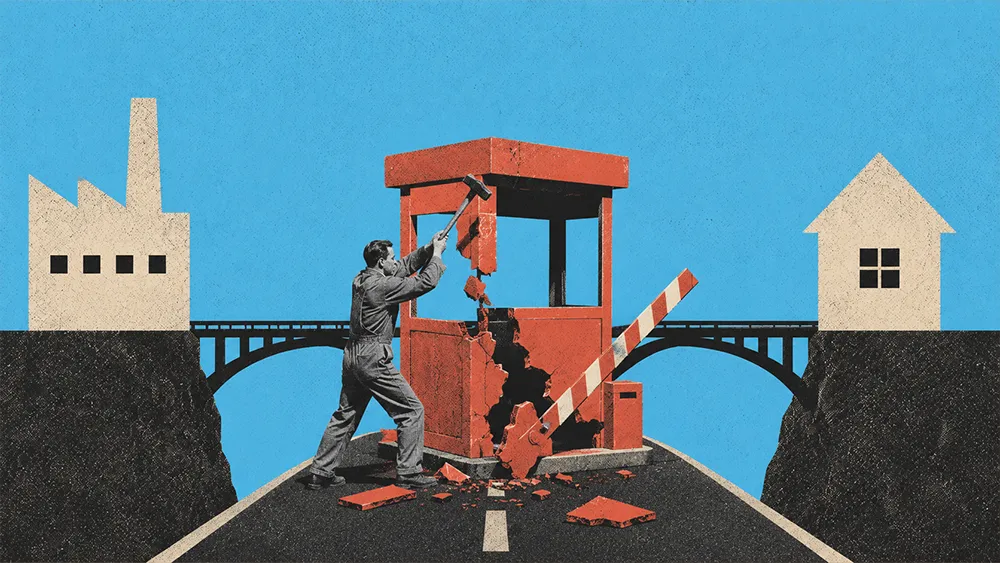
That approach reframes the broker's role from a source of options to a filter. Jernigan sees his job as funneling the overwhelming volume of vendors, TPAs, and PBMs down to a defensible short list. "Instead of having 10 options, you've got five options that have detailed reasons of why these are the five options."
The reason all of this matters comes back to cost. Benefits may be a small slice of the total HR picture, but the stakes are disproportionate to that footprint. "The piece of the pie is small, but the impact is huge," he asserts. "Your health plan cost is going to be one of the top five items on your balance sheet at the end of the year."
Higher utilization, when it reflects a healthier population catching problems early, can lower next year's renewal. That connection between engagement and the bottom line is the one Jernigan thinks the industry still has not fully learned to draw.




.png)