All articles
Mid-Market Employers Gain Real Control When Self-Funded Data Replaces The Annual Renewal Crunch
Nauman Shaikh, VP of Actuarial and Analytics at OneDigital, on why fully insured renewals are no longer the safe default for mid-market employers managing structural cost pressure.
Make Benefits Brief News one of your go-to sources on Google

It's not just about saving money. Once you self-insure, you have more leeway. You have more control.

Nauman Shaikh
Mid-market employers have spent years treating 8%, 10%, or 12% annual premium increases as the tolerable price of predictability, with the implicit assumption that fully insured carriers are doing the analytical work to keep those increases reasonable. The pressure has changed. Costs are accelerating faster than most renewals can absorb. Other industries have moved decisively toward data-driven decision-making, and healthcare is starting to feel like the conspicuous holdout. Employers that cannot see their own claims data are increasingly recognizing that they're making strategic decisions about one of their largest line items while flying blind, and the market is starting to respond.
Nauman Shaikh serves as the National Vice President of Actuarial and Analytics at OneDigital, a strategic advisory firm focusing on insurance, financial services, and HR. He has more than 20 years of healthcare industry experience, most recently as Vice President of Health Solutions at Aon, with earlier roles at Amerigroup and Humana. As a credentialed actuary advising employers, carriers, government agencies, and provider groups, his vantage point spans the full economics of how healthcare risk gets priced, transferred, and managed across funding models.
"Healthcare has been really lagging when it comes to leveraging the available data. Employers have not relied much on data analytics, and now they're seeing costs escalate," he says. That combination of upward-creeping costs and stagnant analytical practice is what he sees moving more mid-market employers off the fully insured default than at any point in the last decade.
The market is in motion
The numbers Shaikh tracks make the trend clear. At companies with under 200 employees, the number of workers enrolled in self-funded plans has nearly doubled over the last 20 years. He's quick to point out that the driver is not cost savings alone, but a broader shift in posture toward ownership and visibility into where healthcare dollars actually go. "It's not just about saving money. Once you self-insure, you have more leeway. You have more control," he says. "When you fully insure, you're just negotiating renewals every year. When you have self-funding and you have your data, you can actually apply control measures."
The transparency point matters as much as the control point. Fully insured employers often receive no meaningful claims data at all, particularly around pharmacy spend. That blind spot is what makes the renewal negotiation feel like a closed loop where the carrier holds every input. "A big trigger for more companies looking at self-funding is realizing, 'Hey, we have the data. We need to leverage it. We want more transparency,'" Shaikh explains.
The cost pressures are here to stay
The other shift in employers' analysis is the recognition that current cost trends are not the cyclical post-COVID rebound many assumed they would be. "These cost increases that we're seeing are structural. This is the new reality we're in," Shaikh asserts. "When you see these specialty drug pipelines, they're not going anywhere. When you see the increasing prevalence of cancer and diabetes, that's not changing soon." These are just two examples of the structural, permanent changes to the healthcare system that he believes make a business-as-usual approach to renewals unsustainable.
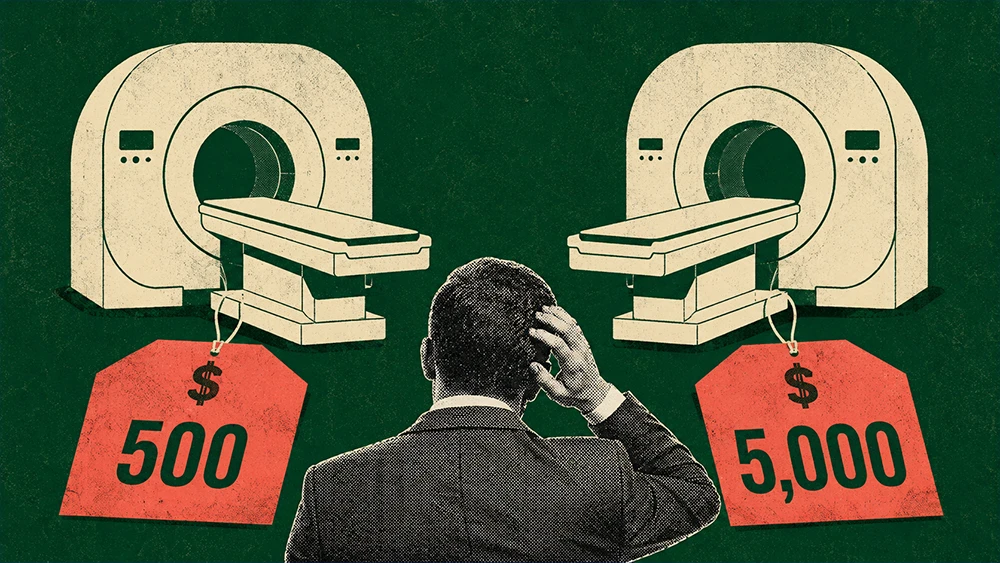
The cost pressure, he says, operates on two axes: utilization and unit cost. Utilization rebounded from its COVID dip and has continued climbing. The harder driver is unit cost, particularly the variation in what providers actually charge for the same service. "The same MRI could cost $500 or $5,000 in a given city. If you really want to bend the trend, you have to address your unit cost and site of care." Site-of-care variation is invisible to employers without claims data, which is precisely why the data access argument has become central.
Provider consolidation compounds the problem, because hospital systems with less competition have less pressure to negotiate. "Depending on where you are, if you don't have much competition in your market with hospital systems, you're going to have very little leveraging power," Shaikh says.
Level funding and captives as transition paths
Concern over volatility is the most common reason Shaikh sees mid-market employers stay fully insured even when the trend is moving against them. His response is that the leap does not have to be direct. He suggests considering level funding, which offers a hybrid approach. "You're paying fixed premiums, and if you do run better with your loss ratios, you get reimbursed. But at the same time, you're capped, so you know your maximum liability. Moving to level funding as a transition is a great way for small-to-mid-sized employers to prepare to eventually go self-funded." He says captives can serve the same transitional function for a slightly different employer profile. An organization with 200 to 300 employees can join an industry-specific captive, gaining access to a risk pool of similar employers along with the data and control benefits that come with it.
The point of both pathways is the same. Volatility is manageable when employers can stage the transition, and the data they accumulate during the transition makes the eventual move to full self-funding both safer and more accurate.
The CFO and CHRO finally have a shared basis for the conversation
The internal politics of moving off a fully insured plan are real, and Shaikh frames them as the natural tension between two competing incentive structures. "There's a disconnect between the CFO and CHRO," he notes. "CHROs get judged on retention, recruiting, and having competitive benefits. CFOs are more concerned with cost and savings and budgeting and predictability." The two priorities pull against each other when the only conversation happening is about premium increases. When both sides can look at claims data together, the conversation changes. "They can see eye-to-eye when there's more transparency. If they can move to self-funding and actually save the company 5%, 10%, or 20% in annual premiums, that money can be redistributed to enrich their benefits, and both sides win."
The takeaway for mid-market benefits leaders is that the safety of the fully insured default is eroding from two sides at once. Cost trends are structural rather than temporary, and the data access required to manage them effectively lives on the self-funded side of the line. The volatility concern that has historically held employers back from making the move deserves a closer look on the time horizon that actually matters. "Month to month, yes, there is volatility with self funding," Shaikh acknowledges. "But if you stretch the horizon five to ten years, you'll find that fully insured can be even more volatile."





.png)