All articles
ICHRA Goes Upmarket as Large Employers Embrace Choice
SureCo Co-Founder Matt Christopherson explains how the defined-contribution ICHRA model caps financial risk for employers while empowering employees with real choice.

Make Benefits Brief News one of your go-to sources on Google

ICHRA, in its basis, is empowering the employee to have the freedom of their choice. It opens up the whole network of carriers and plans depending on where they live, and that power of choice releases the employer from being at fault for what’s being offered.

Matt Christopherson
Annual health benefits renewal has become a pressure test for leadership teams. They're trapped between steep premium hikes from a handful of carriers and a workforce fed up with one-size-fits-all plans that neither employers nor employees truly control. As frustration builds on both sides, employers are looking beyond incremental fixes toward a structural reset that brings financial predictability back to the business while giving employees meaningful control over their coverage.
Since the ICHRA legislation took effect, Matt Christopherson, Co-Founder of SureCo, has focused on making the model practical at scale for large employers. He explains that the solution lies in fundamentally changing the employer's role from plan administrator to benefits funder.
"ICHRA, in its basis, is empowering the employee to have the freedom of their choice. It opens up the whole network of carriers and plans depending on where they live, and that power of choice releases the employer from being at fault for what’s being offered," says Christopherson.
The cost conundrum: He notes that the nature of group plans means price is typically the main differentiator. "When you're putting a traditional group package together, the strategy is really hard. You're putting a bulk plan together for everybody's needs, but everybody has different needs. Everybody has a different situation. It has to be around cost."
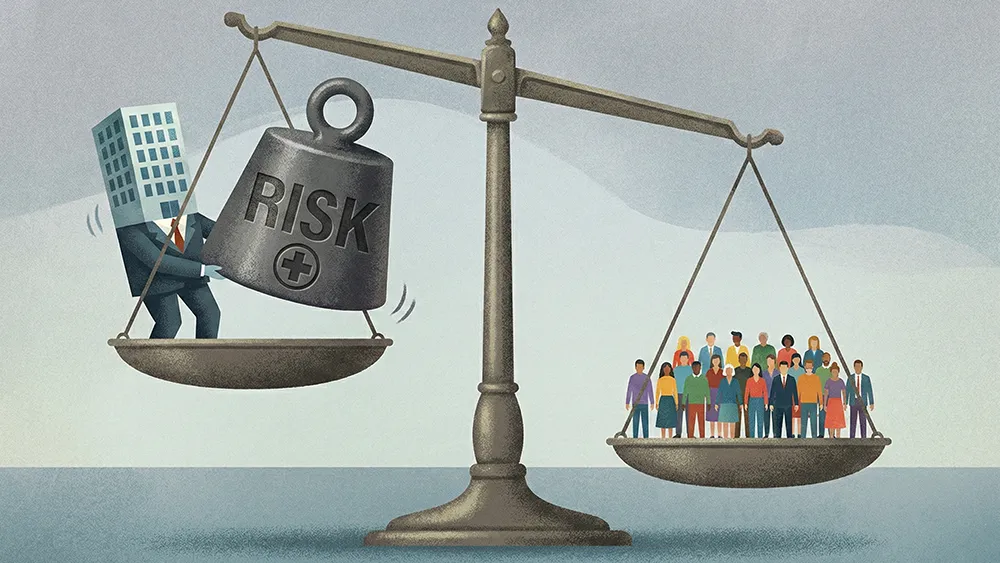
A different approach: ICHRA reframes the employer's role. "It's not a one-size-fits-all like a traditional group plan. The strategy becomes all about the contribution." In an ICHRA, the employer sets a fixed, predictable amount of money to contribute to employee health benefits and employees use those funds to shop on the open individual market. Employers enjoy stabilized costs, while employees gain full freedom of choice.
The defined-contribution model allows companies to cap their financial risk while giving employees access to a far wider array of regional and national carriers. Christopherson says it's common for employers to see 20 to 40 percent lower pricing due to the larger risk pools.
The change also has a notable downstream effect, helping to create a more educated healthcare consumer. This engagement, Christopherson asserts, helps foster a true marketplace for health insurance. "An educated consumer is going to push pressure on the system to put a better product out there."
A plan that fits: Christopherson says ICHRA models can ease frustration for workers who often feel they lack a say in their benefits, since opening the full individual marketplace transfers plan selection to employees. "High utilizers are always going to do the math when it comes to health insurance. They'll weigh their needs and probably buy up for a plan with less out-of-pocket spending."
An educated choice: As a result, many employees begin actively engaging with their benefits for the first time. "We've seen the percentage of employees who download their summary of benefits jump from just five percent to nearly 60 percent," notes Christopherson. "They are actually reading through the plan details. That's the biggest thing ICHRA is doing: creating a savvier healthcare buyer." Christopherson notes that many employers use the savings generated to reinvest directly into employee contributions, further broadening plan choice and increasing perceived value.
The ICHRA model was years in the making. Even after Christopherson’s team spent a decade lobbying for the legislation, its initial rollout was met with a widespread misconception that ICHRAs were only suitable for small 'mom-and-pop' businesses. That initial resistance has finally given way to widespread interest, with diverse organizations including public sector entities proving the model's viability for workforces numbering in the thousands. "In a thousand-employee company, not everyone is going to be happy. They weren't all happy before, either," Christopherson says. "But SureCo has a 92% customer satisfaction score, and a lot of that is because they can finally choose a plan that fits their family's specific needs.”
De-risking admin: The newfound freedom ICHRAs give employees also comes with some important HR considerations, like how to manage the administrative burden when it's employees who own the plan. Christopherson believes the answer lies in modern platforms that mitigate risk with built-in compliance safeguards and direct communication tools that simplify the process for HR teams. "At SureCo, we put guardrails on the platform. We've been perfecting them every year based on the problems we've seen when it's pressure tested."
Ultimately, he says, the model's success hinges on the quality of its execution. Many early rollouts have struggled in this area, relying on a reimbursement structure where employees paid premiums out of pocket and waited for reimbursement, a system that Christopherson warns "goes rogue real quick." That's where the disciplined, often invisible work of managing direct payments to a fragmented network of carriers becomes essential. "Some are very easy to work with, with direct APIs. Some still want to get a paper check. So how do you manage all those moving parts?"
As efforts continue to codify the model's stability into federal law, Christopherson advises that operational accountability is fundamental for success. "We have always said at SureCo that if a premium payment is missed, we're dead in the water. An employee should never go uninsured because we failed to make their payment. That is the commitment required to protect the ICHRA brand."




.png)