All articles
Benefits Are Mission Critical for Empowered, Engaged Nonprofit Employees
Lindsay Crawley-Herbert, Chief People and Transformation Officer at SCAN Group and SCAN Health Plan, shares how data-driven insights and curated plan options help employees navigate benefits.

Make Benefits Brief News one of your go-to sources on Google

We need to make sure we’re designing plans based on what our employee population actually needs and providing clear communication and guidance so that they can confidently select a plan.
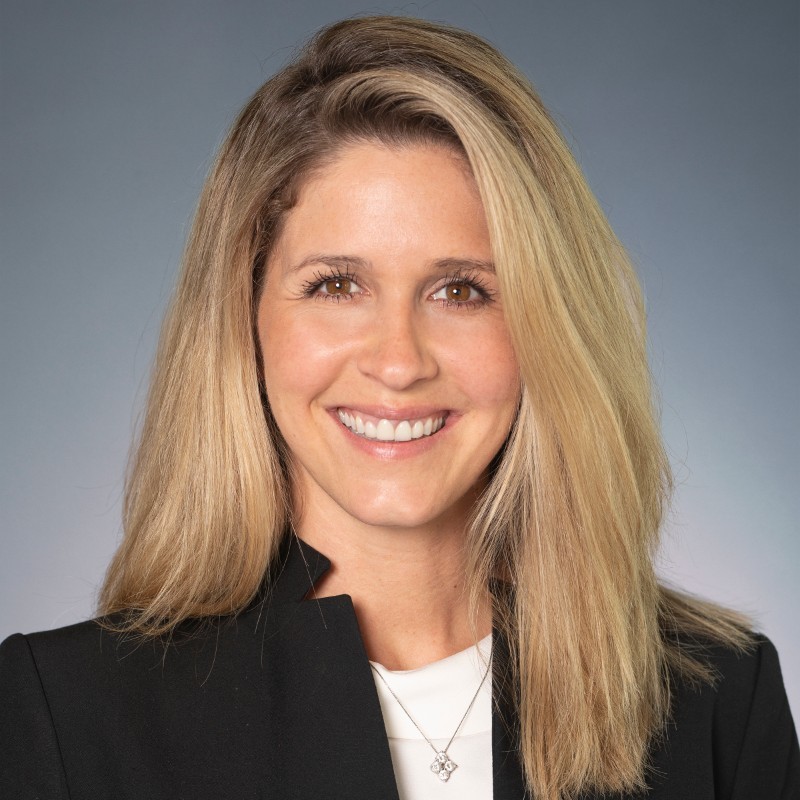
Lindsay Crawley-Herbert
At a mission-driven healthcare organization, employee benefits are more than an HR function. They're a chance to practice what you preach, as employees who feel supported by their coverage are better equipped to deliver that same level of care to the members they serve. It's a connection that helps employees shift from confusion to confidence and turns benefits strategy from an administrative task into a core part of the organization’s mission.
Lindsay Crawley-Herbert is living this reality as the Chief People and Transformation Officer at SCAN Group and SCAN Health Plan. SCAN Group is a diversified not-for-profit healthcare company that operates SCAN Health Plan, one of the nation’s top ten Medicare Advantage health plans serving more than 440,000 members across six states. A certified Professional in Human Resources (PHR) and Certified Public Accountant (CPA), she has over 15 years of experience driving organizational growth and culture through effective talent management, employee engagement, and HR integration. Crawley-Herbert asserts that the key to successful plan selection is a disciplined, empathetic approach that prioritizes employee needs over endless options.
"We need to make sure we’re designing plans based on what our employee population actually needs and providing clear communication and guidance so that they can confidently select a plan." Without the right wraparound support and education, she adds, the choice can become overwhelming.
The magic number: Crawley-Herbert believes the first step is reconsidering what employee choice actually means. To combat decision fatigue, which is a common challenge for HR leaders trying to simplify enrollment, she advocates for a curated approach. "In my experience, the sweet spot is typically three to four plan options. This provides enough variety to meet the different needs of everyone, but not so many that employees get overwhelmed."
Room to grow: Because SCAN’s workforce has historically been concentrated in California, where HMO-style plans are common, its portfolio reflects that market reality. As the organization has grown and expanded geographically, Crawley-Herbert and her team have focused on preserving the balance between affordability and flexibility while expanding options for employees outside the state. "At SCAN, we are very intentional about this, offering a mix of HMOs for those who are cost-conscious and a PPO for those who want more choice."
Crawley-Herbert's philosophy is built on straightforward communication about the trade-off between a plan’s cost and its flexibility. Helping employees understand, for example, why a PPO with more choice has a different price structure than a narrow-network HMO, is a key part of the strategy. "With more choice often comes a cost. That’s why we offer flexibility for employees based on their needs and budget. For employees who are comfortable with narrower networks, we offer affordable plans, while those who prefer greater flexibility can choose plans with broader access at a slightly higher cost."
Data diagnosis: In her view, pulling off a seamless enrollment period requires a combination of data and technology. Long before open enrollment begins, doing a deep dive into utilization trends can deliver insights that inform plan decisions and help a benefits portfolio evolve from a static offering into a responsive tool for employee wellness. "For example, our analysis showed that high mental health claims were driving a lot of our cost. In response, we intentionally focused on education and added more lucrative benefits for counseling and medication, along with supplemental vendor support," Crawley-Herbert says. "The data helps you hone in on what your employees truly need."
Guidance on demand: The second pillar is technology, which makes personalized guidance scalable. At SCAN, it takes the form of a tool that helps employees model their specific needs against the available plans. "We found this to be very beneficial because even after educational sessions, many employees still don't fully understand their options. When the tool provides a personalized recommendation based on their own data, they feel much more confident in their selection," she explains.
This data-and-tech strategy can be further leveraged to tackle employee pain points, from practical plan questions to systemic challenges. One of the most common friction points Crawley-Herbert sees is figuring out whether a doctor is in-network. "To solve this, we built a provider lookup tool directly into our open enrollment process. It helps employees confirm their provider is in-network and requires them to acknowledge they understand the network they've chosen before finalizing their decision." Another challenge, she says, is getting appointments in specialty networks, which presents obstacles industry-wide. "It isn't specific to our employees. It's a massive issue, and we educate and provide guidance to our employees on how to navigate that."
Such an emphasis on the employee experience stands in stark contrast to the more common approach of prioritizing costs over employee well-being. For Crawley-Herbert, placing equal importance on access and support is fundamental to the organization's mission. "For us as a health insurance company and a nonprofit, it is mission critical to give really good benefits and holistic care to our employees, who then are giving that holistic care to our members. For us, this is a very high priority."





.png)