All articles
Employers Gain Influence Over Healthcare Costs Through Direct Care Models
David Balat, CEO of The Direct Care Alliance, says employers are reshaping healthcare by working directly with providers and designing benefits to lower costs, improve care, and deliver better results for employees.

Make Benefits Brief News one of your go-to sources on Google

Providers are starting to hear directly from employers. They’re realizing they can remain competitive without relying entirely on consolidation or traditional insurance negotiations. Direct employer contracting is becoming another way to compete.
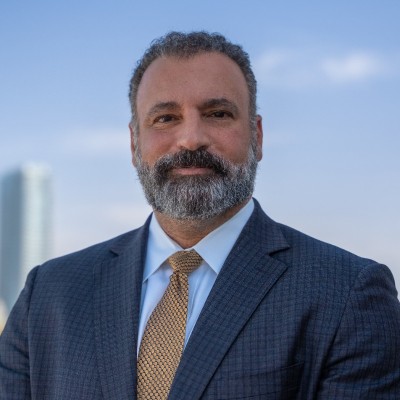
David Balat
Employers are no longer passive buyers of health insurance. Frustrated by volatile costs, limited access, and shifting policies, they are stepping directly into the healthcare marketplace and influencing how care is priced, delivered, and managed. As providers respond by contracting with companies instead of insurers, employers are emerging as a decisive force in reshaping the structure of U.S. healthcare.
David Balat, Chief Executive Officer of The Direct Care Alliance, a national organization that connects employers with direct healthcare purchasing models, and Founder of the 8-million-member Free2Care coalition, which advocates for patient choice and market-driven healthcare solutions, has spent more than 25 years restructuring hospitals and medical practices. Having testified before the U.S. House Committee on Oversight and Reform on market-driven healthcare reform, Balat believes employers are emerging as one of the most influential forces shaping the future of healthcare delivery.
"Providers are starting to hear directly from employers. They’re realizing they can remain competitive without relying entirely on consolidation or traditional insurance negotiations. Direct employer contracting is becoming another way to compete," says Balat. The model introduces new competitive dynamics by allowing employers to influence pricing, care coordination, and service delivery. In doing so, it shifts healthcare decision-making closer to organizations responsible for financing employee coverage.
Networks still matter: “Employers still rely on major insurance networks because employees view those logos as a security blanket. It helps with recruiting and retention. But employers don’t necessarily have to rely on those networks for every healthcare decision,” Balat says. Maintaining network coverage while layering alternative care pathways allows employers to preserve workforce confidence while gaining greater control over how care is delivered and paid for.
Pricing becomes predictable: Bundled payment models transform healthcare from an unpredictable financial liability into a measurable operational expense. They simplify billing, improve transparency, and reduce administrative complexity across provider networks. “Typically, if they’re using direct care contracting programs, the employee has zero out-of-pocket costs. There’s no deductible or coinsurance,” Balat says.
Employers are recognizing that benefit design shapes employee behavior, long-term health outcomes, and overall spending. Moving beyond standardized benefit packages, organizations are tailoring programs to workforce demographics, medical risks, and geography. Preventative care is central, with investments in primary care, early disease detection, chronic condition management, mental health, and wellness programs aimed at reducing high-cost medical events. “Prevention has become a financial strategy, not just a wellness initiative,” Balat says. These programs improve workforce health and encourage earlier, more consistent engagement with care.
Benefits shape outcomes: “Employers want healthcare programs tailored to their populations,” Balat says. “That means looking at workforce age, gender composition, chronic conditions, and geographical factors to determine what solutions will have the greatest impact.” By aligning benefit design with workforce needs and removing cost barriers, employers are reshaping healthcare utilization patterns while improving employee well-being and productivity.
Healthcare becomes financial risk management: Many organizations are combining direct provider contracting, preventative care, digital health platforms, and data analytics to improve spending and care quality. Balat says employers are increasingly building layered healthcare models rather than relying on one single vendor or structure. “I would be wary of anyone who says they have the solution to healthcare,” Balat says. “Our problems are multifaceted, so the solutions must be too. The aggregation of solutions is what’s going to make things better for employees.”
Leadership requires engagement: Organizations that monitor healthcare performance throughout the year are better positioned to identify utilization trends, refine provider partnerships, and maintain program effectiveness. “Employers didn’t start their business to manage healthcare, but the financial impact is so significant that it requires sustained attention and leadership oversight.”
As healthcare costs rise, employer-driven healthcare design is emerging as a viable alternative to traditional insurance. With employer-provider collaboration expanding, healthcare purchasing is becoming more flexible, data-driven, and outcome focused. The approach allows employers and providers room to try new ways of delivering care. “Apart from what government policy ultimately accomplishes, employers and providers need to be willing to try new approaches, experiment with solutions, and take an active role in shaping the system,” Balat concludes.





.png)