
All articles
Franchise Owners Turn To Flexible Coverage Models to Rein In Costs and Support Staff
Maurizio Festa, a Senior Area Manager at Colonial Life and Agency Owner at Insurance Buddy, breaks down the insurance challenges franchise owners face, and how moving to an ICHRA can help employees and franchisees navigate the overwhelming world of health insurance.

Make Benefits Brief News one of your go-to sources on Google

In a catastrophic situation, such as hospitalization or disability, the employee will quickly find that coverage was an illusion, not something he was well informed about.
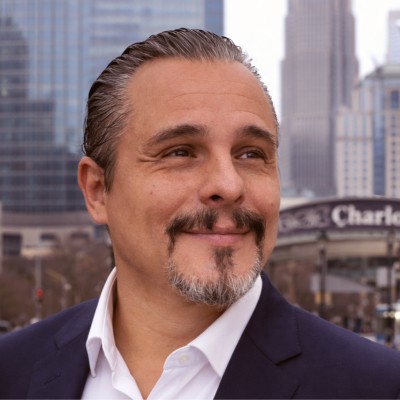
Maurizio Festa
Franchise owners are staring down another year of premium hikes. As employer and ACA premiums continue to climb, health coverage is eating a larger share of operating budgets. The latest KFF Employer Health Benefits Survey puts the average family premium at roughly $26,993—a 6% jump. While large corporations spread these hikes across massive risk pools, franchise owners face a different problem. Even though they wear the branding of a national chain, they operate with the fragile economics of a small business. Owners finance a single location against strict projections outlined in their Franchise Disclosure Documents (FDDs), which means that a few expensive medical claims in a traditional group plan can blow up annual premiums and derail those financial targets entirely.
And, according to Maurizio Festa, traditional plans also often fail the hourly worker. Festa is a Charlotte-based Senior Area Manager at Colonial Life and Agency Owner at Insurance Buddy, where he helps small and midsize operators navigate ICHRA, Section 125 plans, and voluntary benefits. He says that while coverage often holds up in theory, it comes up short in the moments that matter. "In a catastrophic situation, such as hospitalization or disability, the employee will quickly find that coverage was an illusion, not something he was well informed about, " says Festa. "Now they have to pay $7,000, $8,000 out-of-pocket, despite the fact that they live paycheck-to-paycheck."
Dodging the double-digit spike: Traditional group coverage is built for volume. Festa notes that, in a 20-person franchise location, a single bad year can push the following year’s renewal into double digits. "Costs are tied to the risk of the group. If the group has a lot of accidents and a lot of things happen in a calendar year, the next year will be catastrophic for the business."
Pumping the brakes: According to Festa, many franchise operators assume they should plug in the same off-the-shelf group plan that large corporations use, but that assumption obscures the real risk. "A franchise operator might finance half a million dollars to get the business off the ground, but in reality, they needed closer to a million because they underestimated the cost of medical coverage," he explains. "They assume they can plug in the same off-the-shelf plan large corporations use, but the problem is they don’t control the cost of that piece. When premiums are tied to group risk, one bad year can send costs soaring, and the operator has no way to manage it."
Festa notes that ICHRA flips the script, decoupling the employer’s budget from the group’s actual claims. Research backs this up, showing the model stabilizes budgets by moving risk off employer balance sheets and supports a more finance-led benefits strategy. Industry advisors also point out that the strategy offers the dual advantage of employee choice and employer cost stability.
However, handing an hourly worker a stipend and pointing them to the ACA marketplace is a recipe for disaster. As enhanced subsidies expire, the individual market can change fast. Even states that have maintained steady marketplace enrollment still leave consumers battling confusion.
Right-sizing the policy: Festa advises operators to treat ICHRA as a baseline chassis, then layer on guaranteed-issue voluntary benefits—like short-term disability or accident coverage—to zero out out-of-pocket costs. "An employee who knows they will have very few hospital visits might wonder why they have to make their employer spend $20,000 a year. They can get telemedicine as an option. They can get supplemental coverage to reduce out-of-pocket costs. And then they can have an ICHRA that reimburses them on all their premiums."
The technology only works if employees understand how to use it. Festa’s team relies on one-on-one flexible enrollment support to guide workers through their options. For franchise owners, this level of care translates directly to operational survival. Losing a loyal floor supervisor over a medical debt costs far more than funding a better health plan.
Moving to a defined-contribution model requires navigating heavy regulatory tape. Once a franchise crosses the 50-employee threshold, the IRS classifies them as an Applicable Large Employer (ALE), triggering strict reporting obligations and potential Section 4980H penalties. Setting up an ICHRA also introduces specific ACA and ERISA mechanics. To survive the paperwork, operators need to think beyond document platforms or CRMs. They need to look for a provider that can also serve as a consultant and support.
Choosing more than a platform: Industry checklists for vetting administrators echo Festa’s warning: buy a tech platform from a box-checker, and you will be left alone when the IRS knocks. "When you choose your provider, don't choose just a reseller or someone who is checking a box. To do it with just vendors—a person that is just giving you the service and then moving on—is most likely going to leave you in deep water with no help."
Beyond the broken AC: "A lot of people are always working in the day-to-day, and they don't prioritize things. Operators just think they need to make these sales and fix the AC unit that just broke. Work together on a strategy, not on a plan, on a series of plans that can be put in place that can really serve your business."
Festa advises franchise operators to stop treating benefits like a task that can wait until the next quarter. "Schedule a 15-minute consultation with a professional who is there to help you align with what you have to do," he says. "Work together on a strategy—not on a plan, but on a series of plans that can be put in place that can really serve your business. And not only franchise owners, but any business, for that matter."





.png)