
All articles
Why Fixing U.S. Healthcare Dysfunction Requires Incentives That Reward Outcomes, Not Volume
Wellthlinks Founder, Dana Lujan, explains why a shift toward more direct financial relationships can reintroduce price discipline to the U.S. healthcare system.

Make Benefits Brief News one of your go-to sources on Google

When payment is tied to volume, coding intensity, and administrative processing rather than resolution and continuity of care, you get predictable outcomes: more fragmentation, more overhead, and less time with patients.

Dana Lujan
Persistent problems in U.S. healthcare, from provider burnout to administrative bloat, are the products of a system with misaligned financial incentives. This dynamic puts many employers in a bind. As healthcare premiums rise, they're often forced to make difficult decisions about paring back benefits while having no real control over pricing, clinical pathways, or quality. The disconnect severely erodes normal market discipline, shielding the system from the very price and quality pressures that define other industries.
Dana Lujan, Founder of the boutique healthcare advisory firm Wellthlinks and a U.S. Army veteran, says the situation isn't surprising when you consider current payment models. Lujan, a Certified Healthcare Financial Professional (CHFP), Certified Revenue Cycle Representative (CRCR), and author of The CEO Physician, has spent decades navigating healthcare strategy. Her diagnosis is brutally simple.
"When payment is tied to volume, coding intensity, and administrative processing rather than resolution and continuity of care, you get predictable outcomes: more fragmentation, more overhead, and less time with patients," says Lujan. She faults a structure that "rewards the wrong behavior," making the case that the issue is systemic rather than the result of providers' lack of compassion. From this perspective, the dysfunction is a rational response to the existing rules.
Dysfunction by design: "The system isn't broken. It's performing exactly as it's been paid to perform," Lujan says. The core problem, she asserts, is a separation between the parties funding the care and those making the care decisions, leaving employers and patients without the usable price and quality information needed to make value-based choices. "Consumers are expected to shop in a market where real comparison is mostly theoretical."
Momentum lacking: Reform efforts like shared savings, value-based care, and policy layering have attempted to improve accountability, but they've struggled to gain traction. "In most cases, they still sit on top of the same billing structure and pricing system, so many of the original volume incentives remain underneath," she explains.
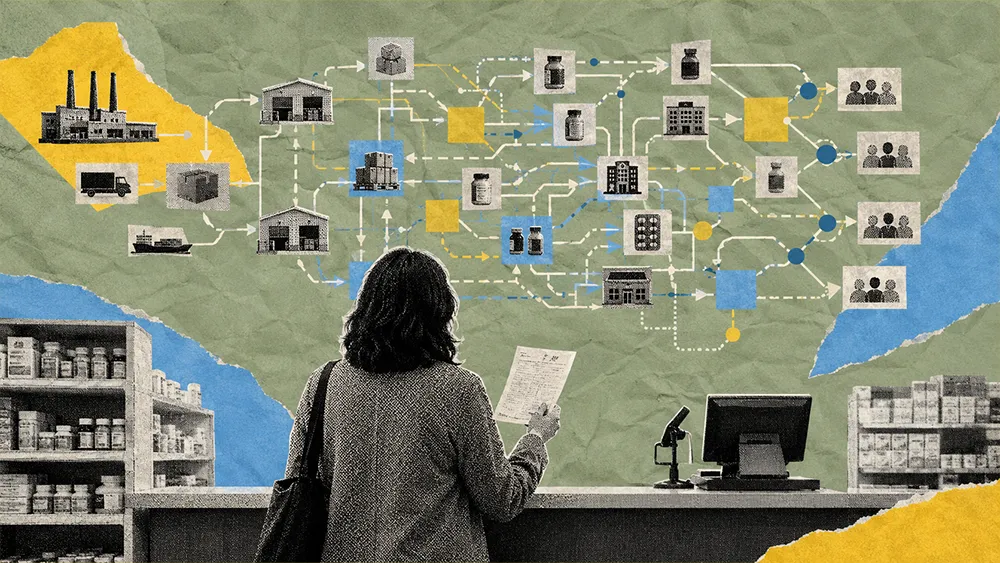
Profitable friction: These tangled processes have become a source of revenue in themselves, creating a business case for intermediaries to manage claims and authorizations. "Administrative layers expand. That cost is passed directly to employers and experienced as friction for the patient," Lujan says. "Essentially, the margin created by these extra layers grows."
The solution is to cut out the middle and strive for more direct financial relationships. As a practical example, she cites workers' comp, where direct employer-provider relationships often lead to faster access and more efficient care. "The shift happens when payment becomes simpler and more direct, with predictable pricing for services, direct relationships for primary care, and fewer intermediaries taking a cut. That is what will actually force the system to compete on value.”
Positive pressure: ICHRAs, which allow employees to shop for their own healthcare and receive tax-free reimbursements from their employers, are another model that gives purchasing power to individuals and restores market cost pressure. "When employers and consumers can direct dollars towards the care models that deliver value, price discipline then reenters the system," Lujan says.
Main Street medicine: Direct primary care and concierge medicine are also growing in popularity. "Ten years ago, when direct primary was just barely making its way, you didn't have a lot of providers coming out to start their own DPC practices. Now DPC and those models are coming to the forefront for small and mid-sized businesses."
Lujan emphasizes that these are gradual shifts that require education and persistence. She notes that while the economic drivers for change are becoming more favorable, real progress takes time. "There's going to be a shift based on whoever controls the dollar. That's the way behavioral economics work. But with behavioral economics, change doesn't happen overnight. It takes a few years for it to progress."



.png)