All articles
Why Employers are Replacing Passive Renewals with Active Management Through Self-Funding
CJ Jordan, Employee Benefits Consultant at Ross & Yerger Insurance, Inc., explains why employers must move from passive buyers to active managers of their health plans.

Make Benefits Brief News one of your go-to sources on Google

The employers who are willing to take control of their plan, access their data, and make intentional decisions are the ones who can actually bend the cost curve over time.
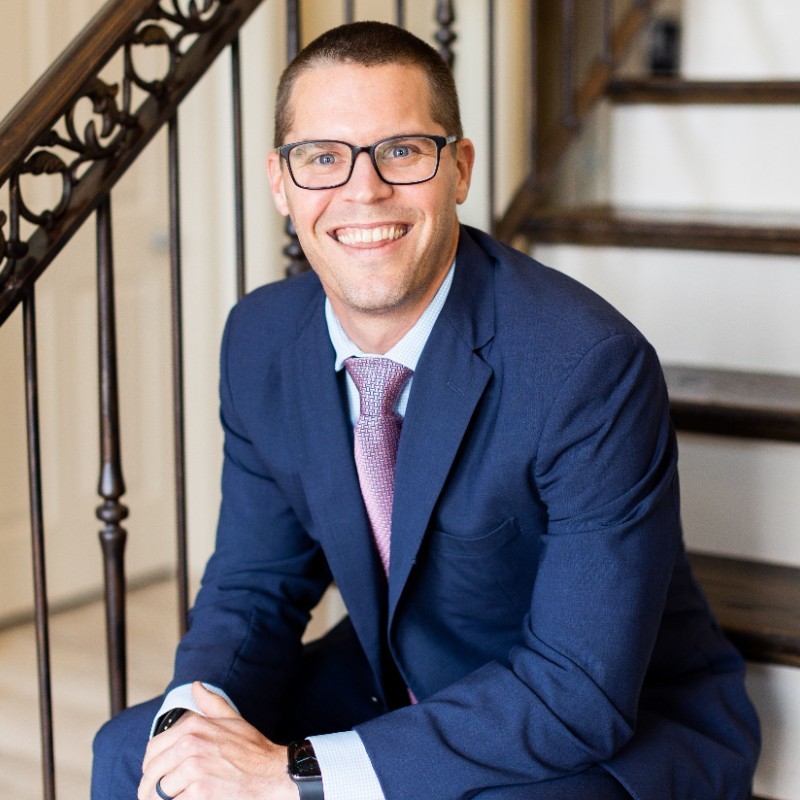
CJ Jordan
For many employers, their annual benefits renewal has become a familiar exercise in absorbing 10, 15, or even 20 percent price hikes with little or no transparency. The traditional broker model, built around annual renewals and reactive cost management, leaves employers with few options beyond passing costs to employees or cutting coverage. But one expert says that strategic benefits management can do more than just stabilize premiums. It can actually bend the cost curve over time.
CJ Jordan has built his practice around this shift. As an Employee Benefits Consultant with Ross & Yerger Insurance, Inc. and the AL Chapter Leader for the Free Market Medical Association, Jordan has built his career on challenging the status quo. His work is guided by the principle that employers should have access to affordable health care, and he helps clients move from being passive buyers to active managers of their own plans. His philosophy is rooted in employers fundamentally reframing their understanding of value.
“We can’t continue to consume healthcare as though it’s a commodity and expect costs to stabilize. The employers who are willing to take control of their plan, access their data, and make intentional decisions are the ones who can actually bend the cost curve over time,” says Jordan. That commodity mindset is born from a feeling of powerlessness, Jordan says, especially in markets dominated by a single carrier.
Inaction as disruption: This belief can foster a powerful inertia, discouraging employers who fear that any new direction is a riskier bet than sticking with their current plan. But he says that the greatest risk lies in inaction, noting that passively accepting a massive renewal is its own form of disruption. "Change also looks like taking another 20 or 25% increase on the chin," he says. "That's change for a company, too. It forces a decision on whether to absorb that cost, pass it off to employees, or raise the deductible."
Pay less, get more: Jordan explains that it starts with a simple mantra and a counterintuitive truth about the healthcare marketplace. "The only way to pay less for health care is to pay less for health care. It's about driving people to the places where they can access care more affordably, and that doesn't mean that it's lower quality. It's higher-quality care at a lower cost. In healthcare, it's an inverse relationship: the better you do something, the more affordable it becomes."
Ideally, the first step is gaining access to company-specific data, but that's out of reach in a fully insured arrangement. For this reason, Jordan says the more common path is a strategy an increasing number of employers are exploring to save on health plans: self-funding. Adopting a self-funded model, he says, marks the transition from being a passive buyer into an active manager of the company's own healthcare spending.
First, not final: "Going self-funded is the first step, not the last. It’s the moment you stop passively waiting to see how it goes and instead proactively roll up your sleeves to get to work. It's when you can finally access your own data and make intentional decisions to drive down costs."
Why over how: A well-designed plan is only as good as its adoption by employees. To build the literacy needed for these next-gen benefits to succeed, Jordan advises a simple communication philosophy. "I learned a key lesson in change management from my mother, a former hospital CIO: double the why and half the how. If you relentlessly communicate why you're making changes, explaining that it's to stabilize renewals, protect paychecks, and provide better care, your employees will embrace the 'how.'"
A self-funded model also counters what Jordan calls the "flat renewal trap." What appears to be a win for a fully insured company—a flat renewal in a good year—often indicates they ran at a low 65% loss ratio, overpaying by roughly 15% and handing the carrier a profit. In the self-funded version of that same scenario, the company keeps that surplus, creating a fund to offset a future bad year or reinvest in benefits.
By embracing a proactive, self-funded model, employers can stop being passive consumers and start building a durable organizational advantage. For many leaders facing these annual pressures, the choice is becoming clear. "Being self-funded protects you in bad years and rewards you in the good years," concludes Jordan.




.png)