All articles
Healthcare Dollars Work Harder When Employers Pair Bronze-Level Plans With HSAs
Remodel Health CEO Austin Lehman shares practical tips for employers navigating the transition from traditional group coverage to employee-focused benefits.

Make Benefits Brief News one of your go-to sources on Google

If you learn how to play the healthcare game, you can actually come out ahead. There are a lot of ways to be an educated consumer and save thousands of dollars.

Austin Lehman
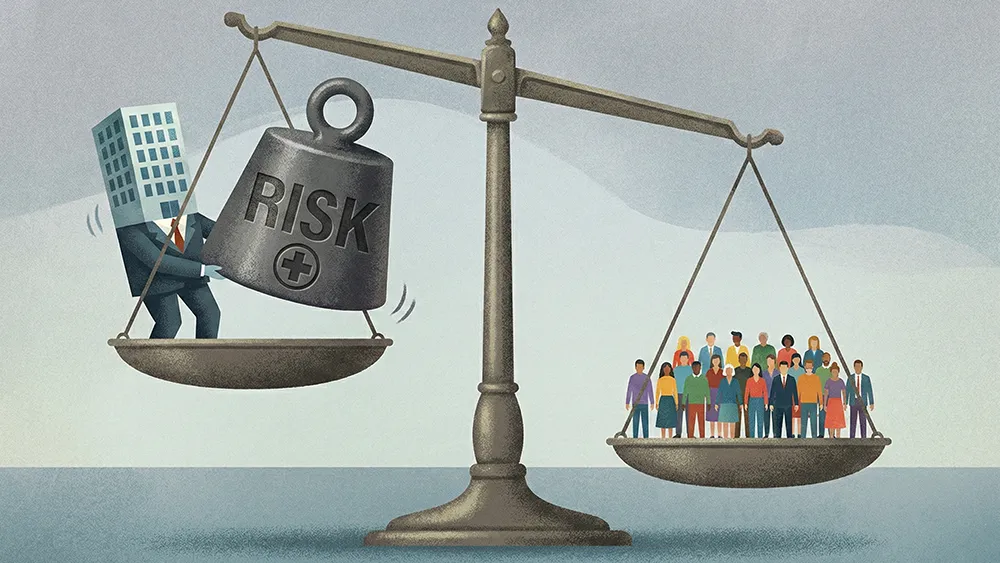
The convergence of latent inflation and new policy incentives is prompting many businesses to move away from traditional group health plans and toward a model with more predictable costs and greater employee choice. ICHRAs offer promising opportunities for both employers and employees, but they're not without their share of challenges.
To learn more about the evolving space, we spoke with Austin Lehman, CEO of health benefits firm Remodel Health. As a CPA with a background in tax services, Lehman has helped more than 4,000 organizations deliver better benefits while managing budgets wisely. He says despite growing financial pressure, businesses can still control benefits costs with the right strategy.
"If you learn how to play the healthcare game, you can actually come out ahead. There are a lot of ways to be an educated consumer and save thousands of dollars."
Gaining ground: Lehman compares the transition from employer-controlled group plans to employee-driven coverage to the historic move from pensions to 401(k)s that took place in the 1970s and 80s. "I think it probably went slower than projected right out of the gate, but in the last five years or so, we've really seen tailwinds in the market starting to move in that direction."
Delayed downside: With the market for ICHRAs growing an estimated 50% year over year, that momentum stems in large part from a difficult economic reality. Lehman explains that medical inflation lags regular inflation since most insurance and hospital contracts are set on three-to-five-year terms. "So the inflation in 2021 and 2022 is working its way through the system as the contracts renew now in '24, '25 and '26. So this latent inflation now is hitting." The cost pressure is driving many to reevaluate traditional group plans.
Despite the upward national trend, Lehman says, some state markets are far ahead of others. States like Pennsylvania, Massachusetts, Oregon, and Washington have seen strong adoption, creating a blueprint for others to follow. Success in these regions, he says, is often closely tied to a healthy local insurance marketplace with favorable carriers and competitive pricing. "The networks are a little bit better for the consumers. There are more options, more alternatives."
Choice matters: In a system plagued by complexity, Lehman believes a core reason for ICHRA's rise is its personal nature. "Health care has become a little bit too impersonal, like the Wizard of Oz with the wizard behind the curtain," he says. Empowering employees to shop for their own coverage lets them land on a plan that matches their needs, preferences, and budget.
Personalization paradox: Yet it's this personal nature that also creates challenges. "Before, employers had to manage one group plan. Now, they have 100 individual plans, 100 payments, 100 different decisions, 100 different doctor lookups." Navigating this reality, he says, creates a market need for high-touch, empathetic guidance.
Lehman advises leaders that a successful transition hinges on setting expectations and providing proper employee education. "If you and I are playing a new board game that we both haven't played, the person who learns the rules the quickest is the one that wins." He says helping employees learn those rules, like how to choose the right plan and deal with hiccups that inevitably arise, is key.
Looking ahead, Lehman points to another legislative tailwind that is making this consumer-driven model even more effective. A recent change has expanded HSA eligibility to include all bronze-level health plans, an option previously restricted to high-deductible plans. He says the new rule is a major development as it dismantles one of the biggest objections to HSAs—the fear of a high upfront deductible. "If you can combine copays with an HSA, it's a really powerful pairing." For many employees, he explains, the low premiums associated with bronze plans mean more money available to save, and ultimately, smarter spending. "My experience has been for the wide majority of people, if they take the difference in savings and put it into an HSA, they end up accumulating funds over time, and then they make better decisions because it's their own money."




.png)