All articles
CHOICE (ICHRA) Affordability 2027: Are Allowances Still Enough?
In 2027 the CHOICE (ICHRA) affordability threshold rose 2.6%, while look-back premiums rose 26%. What that means for allowances, in plain numbers.
Make Benefits Brief News one of your go-to sources on Google


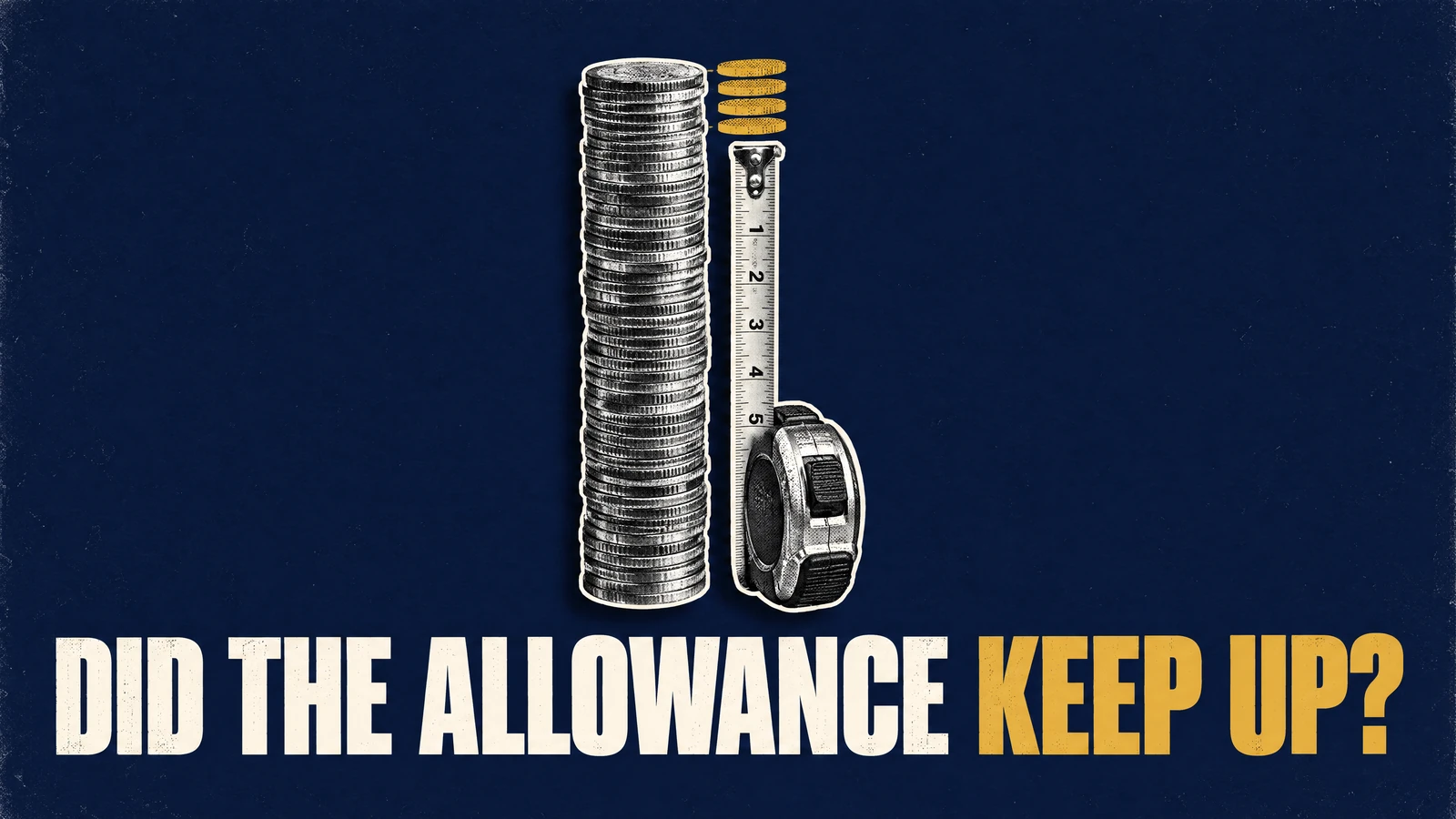
Premiums in the 2027 affordability test rose 26%. The share of income employees can be asked to pay rose 2.6%. What that gap means for CHOICE (ICHRA) allowances, and how to set the right amount.
Large employers that offer a CHOICE Arrangement have one key affordability variable to get right each year: the allowance.
Too low, and the employer may owe an ACA employer shared responsibility payment for full-time employees who qualify for and receive a marketplace premium tax credit.
Too high, and the employer pays more than the rules require.
For 2027, that number needs a new calculation. For employers that use last year's premiums, as the IRS allows, the premiums in the test rose 26% on average. What employees can be asked to pay rose only 2.6%, from 9.96% to 10.22% of household income. An allowance carried over from 2026 can fall short.
This piece covers, in plain numbers, how the 2027 test works, why last year's allowance may no longer pass, how to set the right amount class by class without overpaying, and how the safe harbors protect the employer.
For plans starting January 1, 2027, allowances went out with the participant notice, due by October 3, 2026. Checking them now shows where an employer could owe an ACA employer shared responsibility payment under IRC §4980H for 2027, and the same method sets 2028 allowances.
Key takeaways
- An allowance is affordable when the cheapest silver plan, minus the allowance, costs the employee no more than 10.22% of household income (2027 plan years).
- It is the same rule group plans follow. Only the plan being priced is different.
- Calendar-year plans that use last year's premiums are measured against January 2026 prices, up 26% on average.
- What employees can be asked to pay rose only 2.6%, so an unchanged 2026 allowance can fail.
- Setting the allowance by class, with the right income shortcut, keeps employers covered without overpaying.
What makes a CHOICE allowance affordable?
The employee's remaining cost for the cheapest silver plan has to stay under a set share of income.
The test takes the monthly premium of the lowest-cost silver plan for self-only coverage where the employee lives, subtracts the monthly allowance, and compares what is left with household income. For plan years starting in 2027, what is left can be no more than 10.22% of household income, divided by 12.
Group plans pass the same test, with the same percentage. The only difference is the plan being priced: for CHOICE it is a marketplace plan, not the employer's own. For purposes of ACA employer mandate compliance, an affordable CHOICE offer is treated as providing minimum value, eliminating the need for a separate minimum-value analysis. None of this changed with the new name.
Who has to pass the test?
Employers with 50 or more full-time employees, and only for those full-time employees.
An employer counts as large for a year if it averaged 50 or more full-time employees, including full-time equivalents, in the year before. Smaller employers owe no penalty. Large employers face two possible penalties for 2027:
- $3,780 per full-time employee, minus the first 30, if the employer does not offer coverage to at least 95% of full-time staff and at least one of them gets a tax credit. An offer of CHOICE generally counts as an offer of coverage for purposes of the §4980H(a) 95% offer requirement, whether or not the offer is affordable.
- $5,670 for each full-time employee who gets a marketplace tax credit because the offer was not affordable.
In total, the second penalty can never be more than the first would have been.
What changed for 2027?
Two numbers moved, and the bigger move works against the employer.
| Calendar-year plans | 2026 plan years | 2027 plan years |
|---|---|---|
| Share of income employees can be asked to pay | 9.96% | 10.22% |
| Premiums used under the look-back rule | January 2025 | January 2026 |
| Average change in lowest-cost silver premium that year | +3.9% | +26% |
| Penalty for not offering coverage, per full-time employee after the first 30 | $3,340 | $3,780 |
| Penalty per full-time employee who gets a tax credit | $5,010 | $5,670 |
Sources: IRS Rev. Proc. 2025-25, 2026-26, 2025-26 and 2026-22; KFF.
A higher percentage helps employers: employees can be asked to pay a little more. Higher premiums work the other way: the allowance has to cover more. For 2027, premiums moved ten times as much.
According to KFF, the average lowest-cost silver premium for a 40-year-old rose 26% from 2025 to 2026, after 3.9% the year before. States varied widely, from a 2% drop in Alaska to a 67% rise in Arkansas.
The IRS saw the risk when it wrote the rule in 2019. It noted that prior-year premiums “likely will differ from the actual current year premiums” and chose not to adjust for it, because changes vary too much from place to place.
Why can the 2027 test use 2026 premiums?
Because next year's marketplace prices come out only around November, long after employers usually set their benefits.
So the IRS offers shortcuts, called safe harbors, that replace what an employer cannot know in advance. They are optional, and an employer that uses one applies it the same way to everyone in a class of employees.
| Shortcut | What it replaces | How it works |
|---|---|---|
| Look-back month | Next year's premiums | Calendar-year plans use January premiums from the prior year. Plans starting later in the year use January of the current year. |
| Location | The employee's home address | Price the plan where the employee works. Remote employees with no assigned office are priced at home. |
| Income | Household income, which employers cannot see | Use W-2 wages, rate of pay or the federal poverty line instead. |
There is no shortcut for age: the test uses each employee's age on the first day of the plan year. Employers can also rely on the premiums the marketplaces publish.
The look-back and location rules come from IRS proposed regulations issued in 2019, which employers can generally rely on. A final version was announced in January 2021 but never published in the Federal Register, according to Thomson Reuters EBIA.
How can employers fix the allowance without overpaying?
By setting it class by class, at the level the test requires, instead of one amount sized for the most expensive employee.
The IRS made this point in 2019: one amount sized on the highest-cost silver plan gives employees in cheaper areas more than the test needs. The rules offer more precise options:
- Classes. Allowances can differ for full-time, part-time, salaried and hourly employees, or by rating area, so amounts follow local premiums.
- Age. Within a class, amounts can rise with age, up to three times the youngest employee's amount. An employer that prefers one flat amount can size it on the oldest employee and the most expensive silver plan in the class.
- Rating areas. One rating area can have more than one lowest-cost silver plan. To stay safe, the allowance may need to cover the most expensive one where anyone in the class works.
None of this is new for anyone who sets group plan contributions. The method is the same. Only the plan being priced is on the marketplace.
How do the safe harbors protect the employer?
If the offer is affordable under an IRS safe harbor, the employer owes no penalty for that employee, even if the employee's real income makes the offer unaffordable.
The two tests can give different answers. The employer can use last year's premiums at the work site. The employee's test always uses this year's premiums at home.
The participant notice, due at least 90 days before the plan year, must tell employees how the allowance affects their eligibility for the credit.
What should employers and brokers watch next?
- 2027 marketplace premiums. They come out before open enrollment, which generally starts November 1. They set the look-back premiums for plans starting later in 2027 and for calendar-year 2028 plans.
- A new federal rule. CMS lists a proposed rule, Expanding Access to Individual Coverage Health Reimbursement Arrangements, as a joint action with the Department of Labor and the Treasury, with a July 2026 target. As of October 27, 2026, nothing has been published in the Federal Register. Its text will show whether the affordability rules change.
- The 2028 percentage. The 2027 figure came out on July 21, 2026. The next one sets how much of any premium increase employees can be asked to absorb.
The rule is the same one group plans have followed since 2015. What changed is the size of the numbers in it. For 2027, check that the allowance kept up with the premiums.
Sources
- IRS, Rev. Proc. 2026-26 (July 21, 2026). 2027 required contribution percentage of 10.22% and the premium growth measure used for indexing.
- IRS, Rev. Proc. 2025-25. 2026 required contribution percentage of 9.96%.
- IRS, Rev. Proc. 2026-22 and Rev. Proc. 2025-26. Section 4980H(a) and 4980H(b) amounts for 2027 and 2026.
- 26 CFR 1.36B-2. Affordability formula for an individual coverage HRA, treatment of an affordable offer as minimum value, and tax credit eligibility for employees who keep or waive the allowance.
- 26 CFR 54.4980H-5. The W-2, rate of pay and federal poverty line safe harbors, and employer protection when a safe harbor is met.
- IRS, proposed regulations REG-136401-18, 84 FR 51471 (September 30, 2019). Location and look-back month safe harbors, age rule, reliance, no adjustment to look-back premiums, reliance on marketplace premium data, and IRS guidance on sizing allowances by class, age and rating area.
- Thomson Reuters EBIA, Final IRS Regulations Address Application of Employer Shared Responsibility and Nondiscrimination Rules to ICHRAs (January 21, 2021). Final version announced, close to the proposal, not yet published.
- Federal Register, Annual Update of the HHS Poverty Guidelines (January 15, 2026).
- KFF, Percent Change in Average Marketplace Premiums by Metal Tier. National and state changes in the average lowest-cost silver premium, 2024 to 2025 and 2025 to 2026.
- 29 CFR 2590.702-2(c)(6). Participant notice for an individual coverage HRA, due at least 90 days before the plan year.
- Reginfo.gov, RIN 0938-AW00. CMS proposed rule on individual coverage HRAs, joint agencies and July 2026 target. Federal Register checked on October 27, 2026: no document published.